Section outline

  • WELCOME


    SMC - Faith in development is an umbrella organisation for churches and organisations who believe in      human rights and work for dignitiy for all. Our network contributes to building peaceful, equal, and          sustainable societies.

    This course is for you who want an introduction to SMC - Faith in development. 


    GREETING FROM OUR SECRETARY GENERAL CHARLOTTA NORRBY


  • Learn more about the origin of SMC

    The Swedish Mission Council (SMC) was established in 1912 after the World Mission Conference in Edinburgh in 1910. Its mission has been to bring together churches and faith-based organizations in Sweden to develop, coordinate, and reflect on mission work, both in theory and practice. Despite societal changes, SMC remains an ecumenical meeting place for mission and international development cooperation.

    Over a century later, SMC consists of around 30 member organizations from various Christian traditions. Today some focus on missionary work with a long history, while others prioritize development cooperation and humanitarian aid.

    SMC’s member organisations and their partners are independent organisations with their own long-term strategies based on mission and development cooperation. However, as part of the SMC network, all contribute as well to fulfilling the SMC vision. 


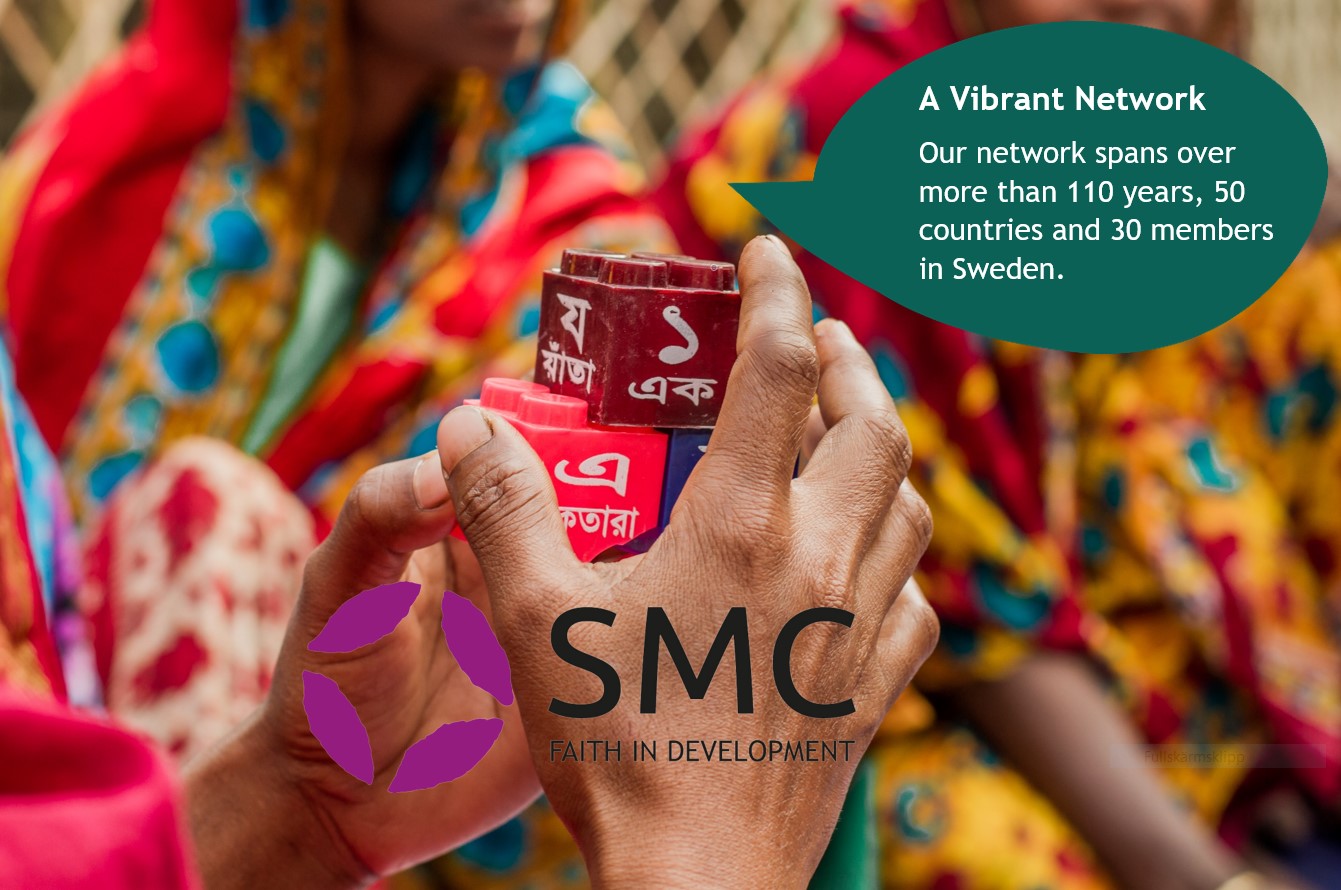
    SMC's global network spans over 50 countries and we maintain long-term collaborations and strong connections with civil society and partners, advocating for indigenous rights, human rights, and environmental protection.

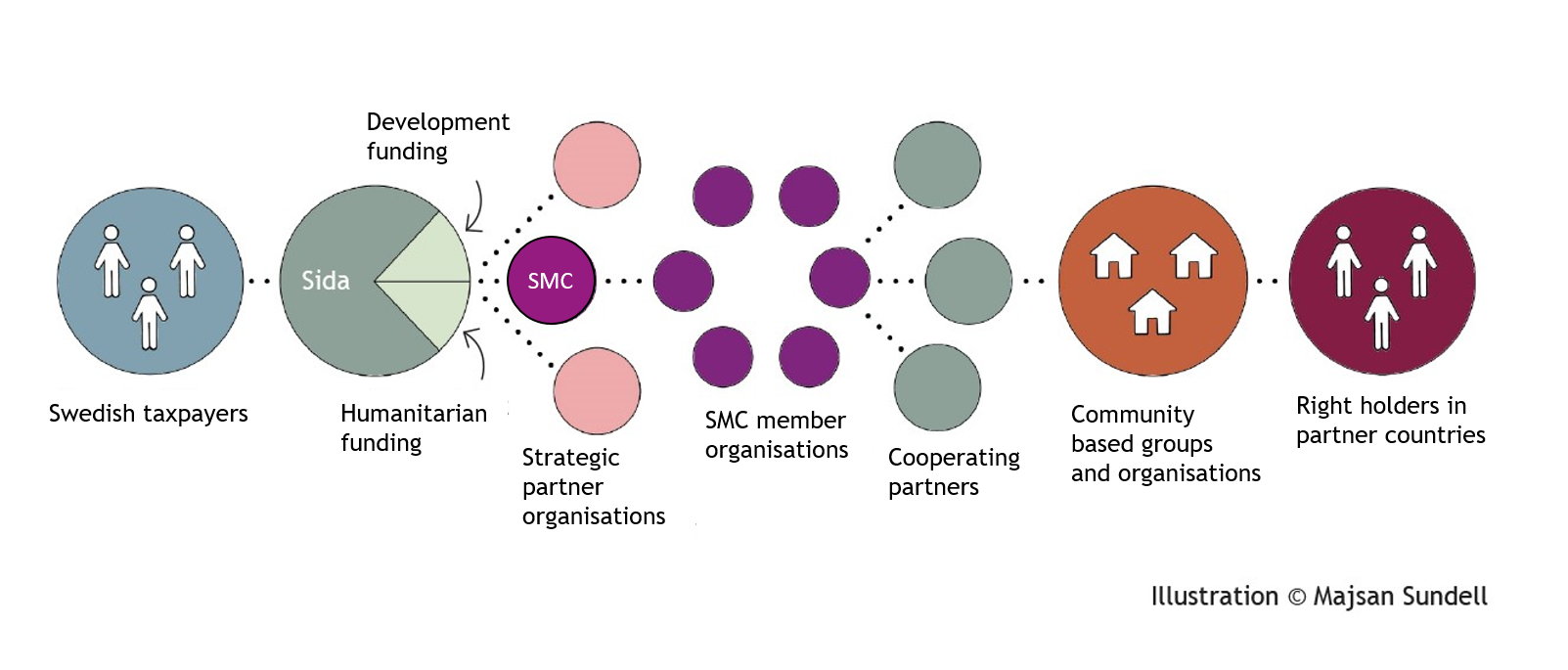
    SMC also receives aid funds from the Swedish International Development Cooperation Agency (Sida), which it distributes to several member organizations for their work with local partners worldwide. In 2022, approximately 230 million SEK was allocated for long-term development cooperation and humanitarian crises.

    •   HOW SMC WORKS?


      SMC operates through strategic partnerships with member organizations and local partners who have strong connections to their communities. These stakeholders are strategically positioned to drive positive change due to the trust they have earned, their deep understanding of local dynamics, and their long-term presence.   

      As an umbrella organization, SMC is owned by its member organizations, and its existence is a result of their collective efforts to bring about meaningful improvements for the local communities they serve.


      Inside the SMC Secretariat: How Things Get Done


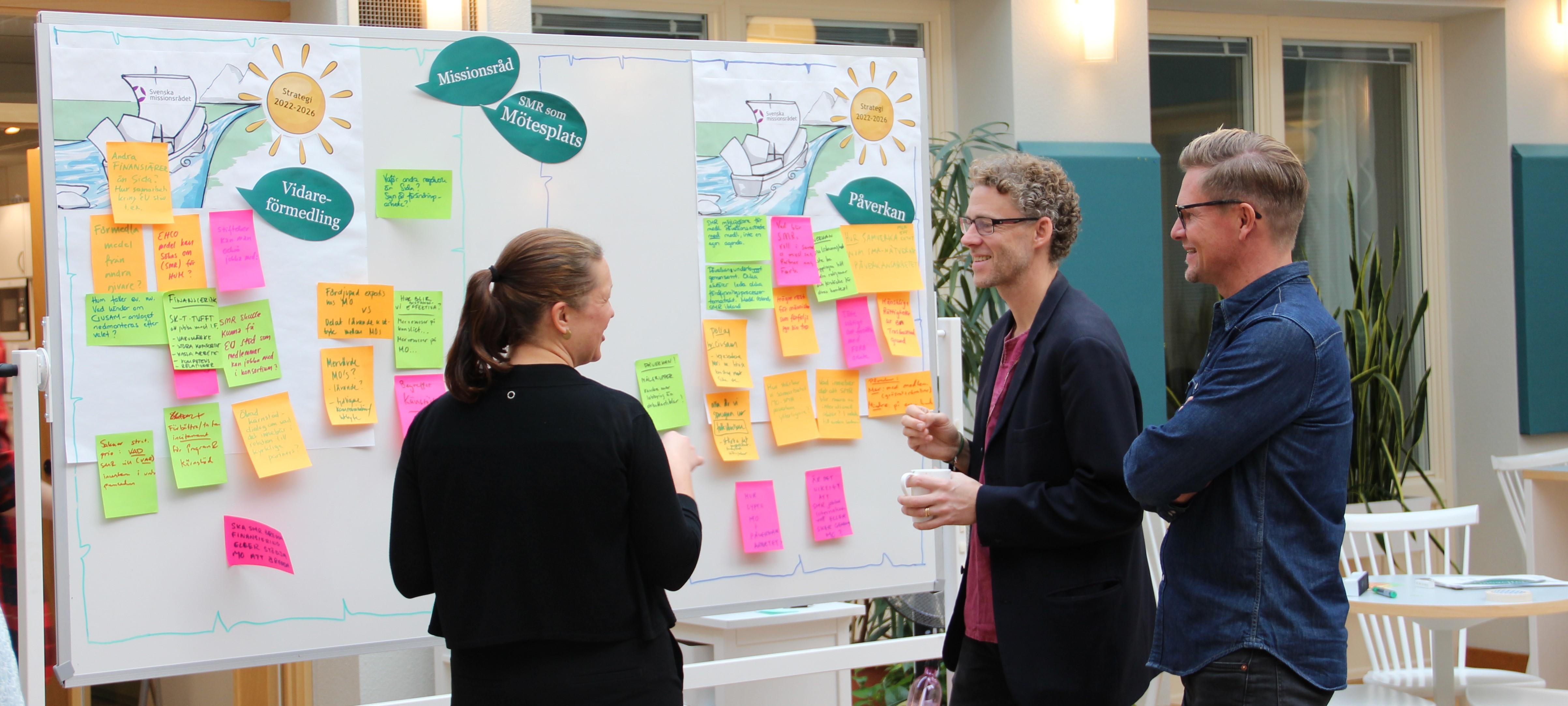
      At SMC’s secretariat in Sweden, administrators, financial controllers, and desk officers work as a team to assess applications and follow up on the results the projects achieve. We have a close dialogue with our member organisations and their partners so that we can learn from each other, network, and together advocate on issues like localisation, nexus, and religious literacy. 

      SMC Has also a team of experts on topics like Freedom of Religion and Belief, Religious literacy, and Religion and Democracy.

      REACH out to the SMC staff by clicking here.

      This illustration shows how the funds are distributed:


      These SMC members are working with long-term development


      230 Million SEK and 50 countries  

      In 2022, we distributed over 230 million SEK to some 70 projects in about 50 countries through our member organisations and their partners. For the projects, we apply for money from Sida through a grant for long-term development cooperation.


    •   The change we believe in


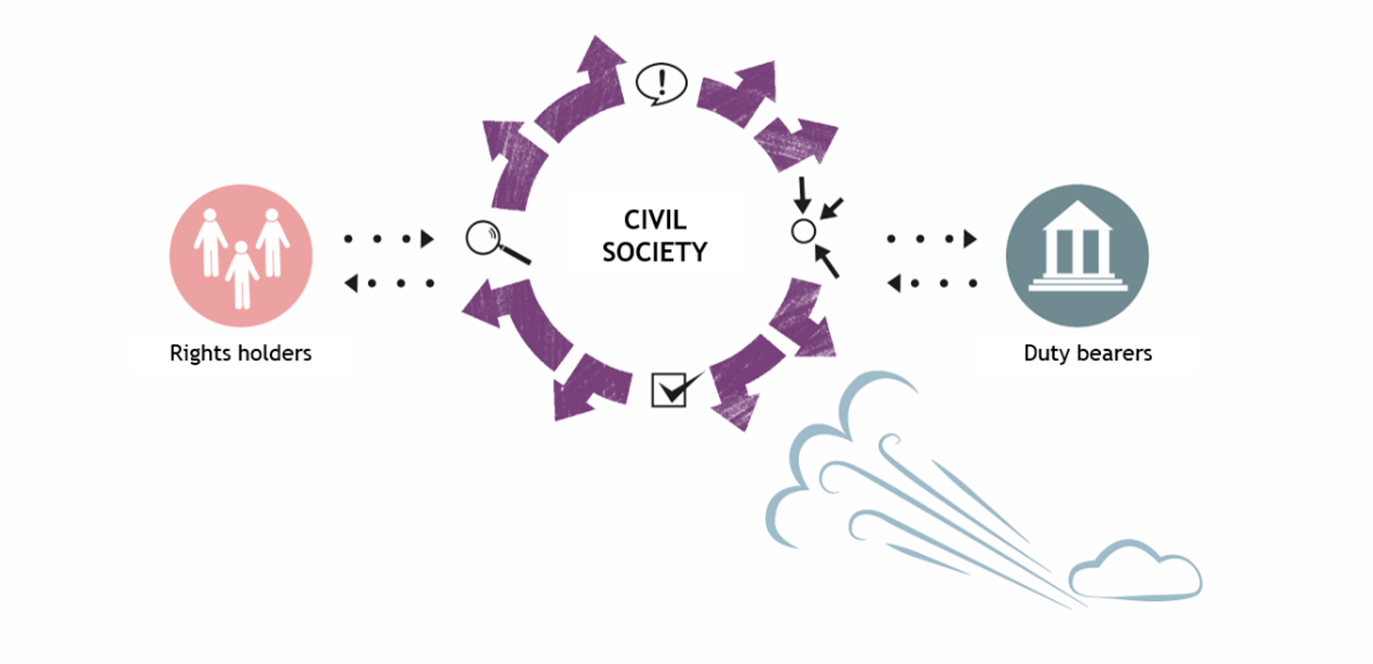
      SMR's operational strategy for 2022-2026 is based on the theme "Believe in a Better World”. SMR's theory of change and development perspective explains how our platform can make civil society stronger. We do this by supporting initiatives that raise awareness, get people moving, take action, and encourage reflection. This, in turn, helps create sustainable societies and respects the dignity of all individuals.

      In our policy, we want to emphasize the importance of faith as a source of inspiration and strength. We believe that not just the Christian faith but other beliefs as well can empower leaders, build communities, promote development, and give hope in our efforts to make the world a better place.

            The illustration of SMC’s Theory of Change shows a cloud and wind symbolizing how faith serves as               inspiration and a driving force for transformation.

    •   SMC's 3 strategic roles 


          To carry out our strategy for 2022-2026, SMC has chosen to work with three strategic roles, these are:


      Meeting place
      Enabling intermediary
      Influential advocate


    •   SMC'S 3 THEMATIC AREAS 


      In addition to its three strategic roles, SMC has also chosen to focus on three thematic areas during our strategy period of 2022-2026, these are:


      Environment, Climate and Resilience
      Faith and Democracy
      Organisation and Partnership


      Environment, Climate and Resilience


      In our international work, we meet many of the people who are ultimately affected by climate change and loss of biodiversity. Our partners work innovatively with green transition and organize themselves to influence local laws and international agreements. As Christians, we see the green transition as part of our mission to care for God’s creation. Many religious traditions have a holistic view of humans and nature. Often, they also have access to large networks of congregations and other social movements. Therefore, we urge religious leaders such as priests and imams to mobilize for the climate.

      We believe that religion can be a key that mobilizes and motivates more people to participate in the green transition.

      Within our distribution of funds for development cooperation, we each year dedicate a grant to promote our member organizations’ work with environment, climate and resilience. It is a way to boost our member organisations’ engagement in sustainable natural resource management, biodiversity and climate change mitigation and adaptation.

      We also cooperate with other actors in the Swedish and global civil society. We want decision-makers in the world to take greater responsibility for the climate by, for example, implementing the Sendai framework for disaster risk reduction  and the Paris Agreement on climate adaptation and reduced greenhouse gas emissions.


      Faith and Democracy


      SMC’s focus on "Faith and Democracy" is grounded in the belief that respect for human rights is crucial for a democratic society. The organization aims to work towards strengthening democracies and ensuring that all individuals, regardless of identity, can enjoy their rights and freedoms. Through a strong civil society, we want to promote pluralistic and inclusive democracies where conflicts can be managed and rights can be demanded.


      The organization possesses specific expertise in the intersection of freedom of religion and belief with other human rights, democracy, and Agenda 2030 goals. We emphasize the importance of seeing faith, human rights, and democracy as interconnected for the fulfillment of Agenda 2030. The focus on religious literacy and bilingualism enables them to bridge contradictions and locked positions between religious and political perspectives.


      Organisation and Partnership


      Our network comprises various organizations, and our partnership is essential for making a positive impact on creating a sustainable society. Across the world, organizations face challenges due to shrinking democratic space, making it crucial for them to be well-prepared and effective in their efforts.  

      To contribute to this, we employ various approaches, including organizational assessments and capacity development plans. We conduct system reviews, focus on organizational learning, and regularly follow up and evaluate progress. Embracing digitalization, we enhance accessibility through the Fabo digital learning platform.

      Additionally, we actively combat corruption and invest in internal management and control, known as ISK. These efforts aim to equip organizations with the tools and strategies needed to navigate shrinking democratic space successfully and foster sustainable development.

  • Wrap up and summary


    Well done for getting to the end of the course!

    You should have now a better understanding of:
    • what is the SMC network
    • how SMC, members and partners work together
    • What are SMC´s identity, vision and the change we believe in 
    • What are SMC's 3 strategic roles and 3 focus thematic areas 2022-2026
    Here you can assess if you got the key messages right and make a summary. Upon completion of this final activity, you will also be awarded your certificate.

  • FEEDBACK


    FEEDBACK SURVEY

    The short feedback survey is set to anonymous by default. The feedback is mandatory to complete the site and download your certificate.

    • PROMPT YOUR CERTIFICATE

      If you take this module as part of the SMC Onboarding course you can prompt your certificate here.  Did you complete all the necessary activities? Then the certificate is ready.

      Otherwise, see which task is still missing below.


    • COURSE CREATOR

      This training was developed by SMC for our member organisations and cooperating partners. 

      Licence

      This course is published under Creative Commons Attribution Noncommercial ShareAlike 4.0 International License.

      Questions? Contact: miriam.mondragon@smc.global


    • Click to return to SMC LEARN